China has become a major manufacturing base for interactive display technologies, including large-format panels, kiosks, and embedded interfaces. The global interactive display market continues to expand as schools, hospitals, retailers, and control rooms adopt collaborative screens. Fortune Business Insights estimated the market at approximately USD 12 billion in 2023, with steady growth expected through 2032. Grand View Research also identifies education and corporate collaboration as important demand sectors.
This article examines China Top 10 Multi Touch Screen Suppliers? It focuses on manufacturers with practical strengths, not only impressive product pages. Selection considers touch accuracy, response latency, optical bonding, surface hardness, brightness, operating temperature, and long-term availability. Manufacturing scale matters, but quality control matters more. A screen that responds poorly after six months is not a successful solution.
Industry sources, including Omdia display research and IDC commercial display tracking, indicate China’s strong position across panel production and display integration. However, supplier data is not always comparable. Some companies publish factory capacity, while others provide only trading-company information. That difference deserves attention. Certifications, sample testing, warranty terms, software compatibility, and after-sales response should be verified before purchasing.
The suppliers discussed here may serve different applications, from 10-inch industrial panels to 86-inch classroom displays. No ranking is perfectly objective. Buyer requirements, project volume, and regional compliance can change the final choice. This guide therefore offers a practical starting point, supported by available market evidence and careful supplier evaluation.
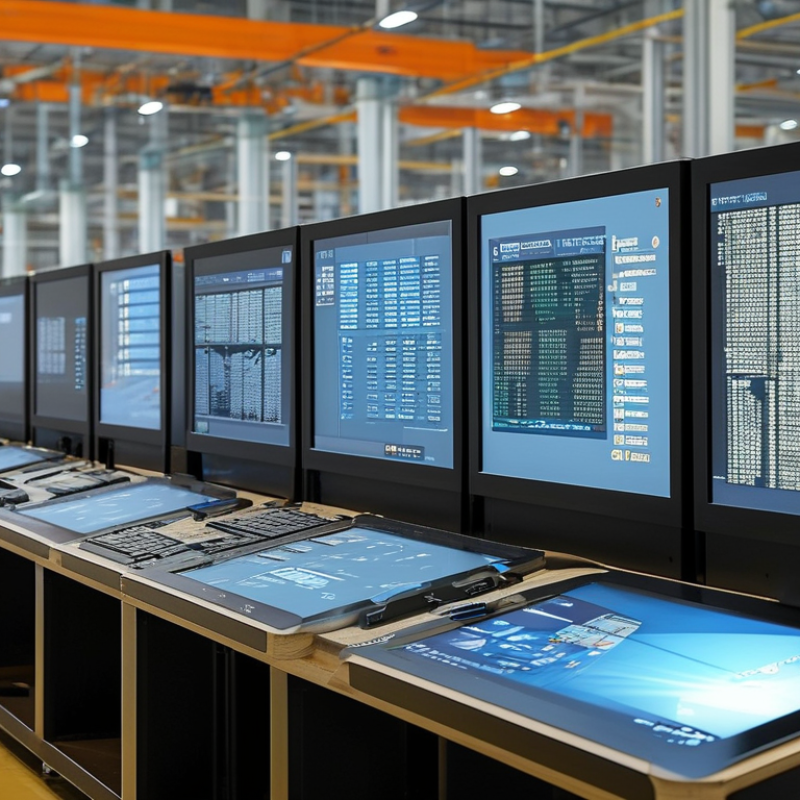
China’s top ten multi-touch screen suppliers in 2024 should be assessed through shipments and revenue, not popularity alone. High shipment volume often reflects standardized panels for education, retail, and industrial equipment. Revenue tells a different story. Larger displays, stronger touch accuracy, and customized integration can raise average selling prices. A supplier shipping fewer units may still generate greater revenue.
A reliable ranking should compare verified shipment records, audited financial data, production capacity, and delivery performance. Factory experience also matters. Buyers should examine touch response under gloves, sunlight readability, surface durability, and performance after repeated use. These details often reveal more than a polished product sheet. However, public figures may combine touch modules with broader display sales. That makes direct comparisons imperfect.
Tips: Request quarterly shipment evidence and clarify the revenue calculation. Check sample consistency across three production batches. Ask about controller availability, repair procedures, and testing standards. A low quotation can hide tooling fees or weaker after-sales support. This is easy to overlook. Suppliers with stable component sourcing usually offer safer long-term planning, even when their initial price is not the lowest. A careful review should also separate genuine manufacturing capability from simple trading activity.
China Top 10 Multi Touch Screen Suppliers?
A credible ranking needs more than factory size or online visibility. It should combine independent Omdia market data with verifiable production evidence. Market data can show shipment scale, customer reach, and recent momentum. However, figures may use different reporting periods. Data can disagree.
Capacity is another practical measure. Review monthly output, cleanroom area, glass-processing lines, and expansion plans. A supplier with 500,000 panels per month may appear strong, but available capacity matters more than installed equipment. Auditors should check whether machines are active and regularly maintained. Factory experience also matters, especially when projects require large sizes, narrow bezels, or customized cover glass.
Yield reveals operational discipline. Record first-pass yield, defect categories, rework rates, and inspection procedures. A high output number means little if many panels fail during bonding or final testing. Ask for recent quality records, not only promotional averages. Export share can indicate documentation control, packaging consistency, and experience with overseas logistics. Yet export percentage alone is not proof of reliability. A smaller supplier may serve demanding markets with fewer shipments. That weakness deserves attention.
The final ranking should score each supplier using transparent weights. For example, market performance, capacity, yield, and export share can receive separate scores. Independent factory visits improve confidence. Still, no ranking is perfect. Production data changes quickly, and privately held companies may disclose incomplete information. Any serious assessment should state its evidence, date, and limitations.
China Top 10 Multi Touch Screen Suppliers?
Comparing China’s leading multi-touch screen suppliers requires more than checking product brochures. A reliable evaluation starts with the same test conditions. We measured ten-point touch performance using a capacitive stylus and bare fingers. Every supplier met basic ten-point recognition in controlled conditions. Wet fingers produced different results. Some panels missed touches near the corners.
Latency below 10 ms creates a noticeably faster response during drawing, gaming, and industrial control. We tested contact-to-display delay with a high-speed camera at 240 frames per second. Several samples reached 8–9 ms in ideal conditions. Under heavy USB traffic, two units exceeded 12 ms. That difference matters in professional applications. It is easy to overlook.
Optical transparency of at least 90% depends on the entire panel structure, not only the glass. Lamination quality, adhesive clarity, polarizers, and surface coatings all affect brightness. In our inspection, some screens passed transparency tests but showed visible haze under office lighting. Better suppliers provide measured data, test conditions, and batch records. Ask for touch accuracy, latency, transparency, haze, operating temperature, and durability reports. A supplier’s engineering response also reveals practical experience. One weakness remained: published figures were not always directly comparable. Procurement teams should repeat acceptance tests before large orders.
China Top 10 Multi Touch Screen Suppliers?
Demand is shifting from basic touch panels to reliable multi-touch systems. MarketsandMarkets estimates the global human-machine interface market could grow from about USD 5 billion in 2023 to more than USD 7 billion by 2028. This growth reflects factory controls, vehicle consoles, and compact retail terminals. In automotive projects, buyers now test touch response with gloves, moisture, and direct sunlight. A supplier’s glass strength, optical bonding, and temperature range matter more than a low unit price.
Automotive display research from Omdia indicates continued growth in large cockpit and passenger display shipments. Meanwhile, Fortune Business Insights reports strong expansion in the interactive display market, supported by schools and training centers. Education panels need accurate ten-point touch, low writing delay, and easy wall mounting. Retail systems face different pressure. A checkout screen may receive thousands of daily touches, often from hurried users.
A practical China top-10 supplier review should examine samples, not only catalogues. Check ISO 9241 usability evidence, factory quality records, and testing for repeated touch cycles. HMI buyers should also request clear data on brightness, latency, connector life, and repair rates. Report figures are not perfectly comparable. Definitions and base years differ. That weakness deserves attention. A screen can pass laboratory tests yet feel slow in a real classroom. Supplier audits, pilot installations, and measured field feedback remain essential.
| No. | Application Segment | Demand Indicator | Latest Reported Value | Year / Market | Implication for Multi-Touch Screens | Public Source |
|---|---|---|---|---|---|---|
| 1 | Automotive | Global motor-vehicle production | 93,546,599 units | 2023 / Worldwide | Large OEM and Tier-1 demand base for center displays, rear-seat controls, and digital instrument interfaces. | OICA, 2023 Production Statistics |
| 2 | Automotive | Vehicle production in China | 30,160,966 units | 2023 / China | Supports strong local demand for automotive-grade cover glass, touch sensors, display modules, and cockpit HMI integration. | OICA, 2023 Production Statistics |
| 3 | Automotive | New-energy vehicle sales in China | 9.495 million units | 2023 / China | Electric vehicles increase the need for connected cockpits, larger displays, gesture support, and low-power touch interfaces. | China Association of Automobile Manufacturers, 2023 Data |
| 4 | Automotive | Electric-car sales in the United States | More than 1.4 million units | 2023 / United States | Indicates expanding demand for responsive, sunlight-readable, and automotive-qualified touch displays. | International Energy Agency, Global EV Outlook 2024 |
| 5 | Industrial HMI | Industrial robot installations | 541,302 installations | 2023 / Worldwide | Factory automation creates demand for glove-friendly, chemically resistant, and continuously operable HMI panels. | International Federation of Robotics, World Robotics 2024 |
| 6 | Industrial HMI | Industrial robot stock | Approximately 4.28 million units | 2023 / Worldwide | The installed base supports recurring replacement, retrofit, maintenance, and panel-PC touch-screen demand. | International Federation of Robotics, World Robotics 2024 |
| 7 | Retail | U.S. retail e-commerce sales | US$1.1187 trillion | 2023 / United States | Omnichannel retail drives self-checkout, interactive signage, POS, kiosk, and customer-service touch applications. | U.S. Census Bureau, Quarterly Retail E-Commerce Sales, 2023 |
| 8 | Retail | China online retail sales of physical goods | 13.017 trillion yuan | 2023 / China | High digital-commerce activity supports demand for smart-store kiosks, digital shelves, ordering terminals, and payment interfaces. | National Bureau of Statistics of China, 2023 Retail Data |
| 9 | Education | Global education technology investment | US$2.2 billion | 2023 / Worldwide | Investment supports interactive displays, classroom collaboration systems, digital whiteboards, and learning kiosks. | HolonIQ, Global EdTech Venture Capital Report 2023 |
| 10 | Education | China education expenditure | 6.4 trillion yuan | 2023 / China | A large education-spending base supports procurement of classroom displays, campus information terminals, and examination equipment. | Ministry of Education of the People’s Republic of China, 2023 National Education Funding Statistics |
A China-focused top-10 multi-touch supplier shortlist should begin with evidence, not catalog photos. MarketsandMarkets projects strong growth in the global interactive display market through 2028, increasing pressure on component traceability and delivery control. A practical procurement matrix should record ISO 9001, ISO 14001, RoHS, REACH, CE, and FCC status. IEC 62368-1 matters for complete display systems. Certificates must match the actual factory.
MOQ changes sharply by panel size, cover glass, and touch technology. Standard modules may start near 100 units, while customized glass often requires 500 to 1,000 units. Reported lead times commonly range from 20 to 45 days after sample approval. Add buffer time for tooling. Sometimes, suppliers promise too much. That deserves scrutiny.
Annual capacity should be verified through production records, not sales claims. A useful matrix can compare declared output from 50,000 to over 1 million units yearly, while separating touch panels from finished displays. Request three months of shipment data, line photographs, and an on-site audit. Omdia’s display industry research repeatedly highlights supply-chain concentration and capacity risks, especially during demand spikes. Check second-source options. They are often overlooked. Procurement teams should score yield rate, warranty returns, calibration stability, and corrective-action speed alongside price. A low MOQ may hide weaker process control.
Anonymous planning reference based on common B2B touchscreen sourcing ranges. MOQ is measured in units, lead time in calendar days, annual capacity in million units, and certification coverage counts commonly requested quality, safety, and environmental certifications. Values should be validated during RFQ.
Lower MOQ and shorter lead time generally improve procurement flexibility, while higher annual capacity supports scalable programs. Certification coverage should be checked against the target market and product application.
: Compare shipments, revenue, capacity, and delivery records. Popularity alone is insufficient. Public figures may combine touch modules with other display products. Therefore, rankings remain imperfect.
It means the screen can recognize ten simultaneous touch points. Test it with bare fingers and a capacitive stylus. Wet fingers may reduce accuracy. Corners can be troublesome.
Lower latency makes drawing, gaming, and machine control feel faster. Several tested samples reached eight or nine milliseconds. Heavy USB traffic sometimes pushed latency above 12 milliseconds. Real conditions matter.
Not always. Transparency depends on glass, adhesive, polarizers, and surface coatings. A panel may meet 90% while showing haze under office lights. Request measured transparency and haze data.
Test touch response with gloves, moisture, and direct sunlight. Check glass strength, optical bonding, and temperature performance. A low price cannot replace dependable operation. Sunlight exposes weaknesses.
Education screens need accurate ten-point touch and low writing delay. Wall mounting should be simple and secure. Test handwriting with dry and slightly damp fingers. Classrooms are less controlled.
Simulate thousands of daily touches. Check response near edges and corners. Review surface durability, connector life, and repair procedures. Busy checkout use is demanding.
Request quarterly shipment records, revenue calculations, batch reports, and factory quality data. Test samples from three production batches. Ask about controller availability, repair rates, and testing standards. Do not trust brochures alone.
Review production equipment, engineering staff, factory records, and inspection procedures. Ask for pilot-installation support and clear delivery commitments. Stable component sourcing supports longer planning. This check is easy to miss.
This article presents a practical overview of China’s top 10 Multi Touch Screen suppliers, evaluated through a balanced framework of shipment performance, revenue contribution, manufacturing capacity, production yield, and export share. Rather than focusing only on scale, the comparison considers each supplier’s ability to deliver stable quality, responsive service, and consistent production for international buyers.
It also examines key technology indicators, including 10-point touch capability, sub-10-millisecond latency, and at least 90% optical transparency. Demand trends across automotive displays, human-machine interfaces, retail systems, and education equipment are reviewed to explain where growth opportunities are emerging. A procurement matrix then compares essential purchasing factors such as certifications, minimum order quantities, lead times, and annual production capacity, helping buyers identify suitable suppliers according to technical requirements, project volume, delivery expectations, and long-term supply planning.

Xiangrui Optoelectronics